The initiative, funded by the Regional Fund for Productivity and Development (FRPD) 2026 of the Regional Government of Arica and Parinacota, will establish a dynamic, integrated, community-based laboratory to generate scientific evidence aimed at improving public infrastructure in mountain territories, strengthening energy efficiency, climate adaptation, and data-driven decision-making.entada a mejorar la infraestructura pública en territorios de montaña,fortaleciendo la eficiencia energética, la adaptación climática y la toma de decisiones basada en datos.
The Andean Geothermal Center of Excellence (CEGA) at the University of Chile was awarded funding from the 2026 Regional Fund for Productivity and Development (FRPD) of the Regional Government of Arica and Parinacota and its Honorable, de la Universidad de Chile, se adjudicó el Fondo Regional para la Productividad y el Desarrollo (FRPD) 2026 del Gobierno Regional de Arica y Parinacota y su Honorable
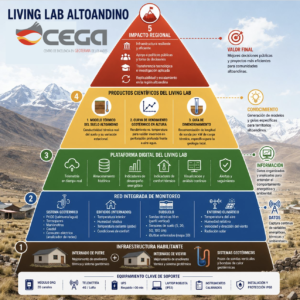
Regional Council, to implement the project “High-Andean Living Lab: Innovation for Adaptive Infrastructure in the Altiplano,” a pioneering initiative aimed at generating applied scientific knowledge to address the challenges of habitability and energy efficiency in the Chilean Altiplano. “Living Lab Altoandino: Innovación para infraestructura adaptativa de altiplano”, una iniciativa pionera que busca generar conocimiento científico aplicado para enfrentar los desafíos de habitabilidad y eficiencia energética en el altiplano chileno.
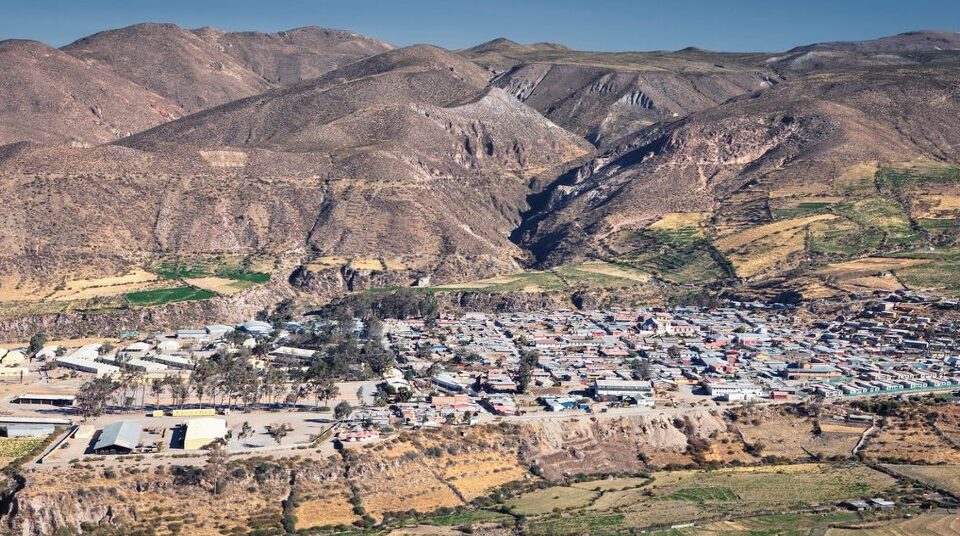
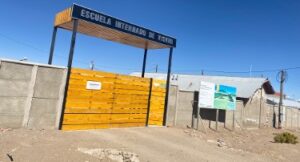
El proyecto contemp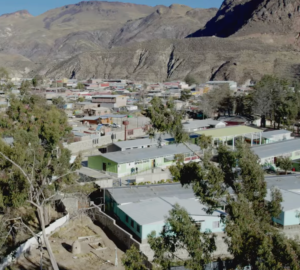 The project will involve upgrades to the boarding facilities at Liceo Granaderos de Putre and Escuela de Visviri, both of which are equipped with geothermal heating systems previously developed by the University of Chile. Building on this foundation, the initiative will improve the buildings’ thermal envelopes and implement permanent scientific monitoring infrastructure to assess, under real operating conditions, the performance of the energy systems, the thermal behavior of the buildings, and the environmental variables specific to the High-Andean territory.
Unlike a conventional infrastructure intervention, this project will transform both facilities into a High-Andean Living Lab: a dynamic laboratory in which public infrastructure will serve as a platform for applied research, continuously generating data to validate technologies, optimize designs, and develop models specifically tailored to high-altitude mountain environments. Living Lab Altoandino, es decir, un laboratorio dinámico donde la infraestructura pública funcionará como una plataforma de investigación aplicada, generando información continua para validar tecnologías, optimizar diseños y desarrollar modelos específicos para zonas de alta montaña.
For CEGA Director Diego Morata, Full Professor at the Department of Geology of the University of Chile, this funding award represents an important step toward consolidating the contribution of applied research to regional development. “This project demonstrates how science can respond to concrete challenges faced by local territories. Our goal is not only to improve the infrastructure of two educational facilities, but also to generate knowledge that can guide future public investments in high-altitude areas and extreme climatic conditions, providing evidence-based solutions to address climate change and move toward more resilient infrastructure,” he explains. “Este proyecto demuestra cómo la ciencia puede responder a desafíos concretos del territorio. No solo buscamos mejorar la infraestructura de dos establecimientos, sino generar conocimiento que permita orientar futuras inversiones públicas en zonas de alta montaña y condiciones climáticas extremas, aportando soluciones basadas en evidencia para enfrentar el cambio climático y avanzar hacia una infraestructura más resiliente”, explica.
For her part, project director Linda Daniele highlighted that the initiative will make it possible to validate technologies in a scientifically unique environment. “The High-Andean Living Lab will allow us to study the combined behavior of buildings, geothermal systems, and the natural environment under extreme high-altitude conditions. The information gathered will be essential for developing models specifically tailored to the Chilean Altiplano and strengthening decision-making on public infrastructure.” “El Living Lab Altoandino nos permitiráestudiar el comportamiento conjunto de los edificios, los sistemas geotérmicos y el entorno natural bajo condiciones extremas de altura. La información obtenida será fundamental para desarrollar modelos específicos para el altiplano chileno y fortalecer la toma de decisiones en materia de infraestructura pública.”
One of the project’s core components will be the implementation of a permanent monitoring platform that will collect environmental, energy, and operational data from the participating facilities.
“We will install an integrated network of sensors to continuously monitor the thermal behavior of the buildings, the performance of the geothermal system, and the environmental conditions of the territory. This information will be processed and validated to transform it into scientific evidence that can support researchers, public agencies, and future infrastructure projects,” explains Diego Aravena, CEGA researcher and faculty member at the University of Atacama, and principal investigator of the project, which will generate a database unprecedented in Chile., explica Diego Aravena, investigador del CEGA y docente de la Universidad de Atacama, investigador principal del proyecto que generará una base de datos inédita para el país.
In addition to directly benefiting students, teachers, and educational communities in Putre and Visviri, the information generated by the project will be made available to support planning by the Regional Government, municipalities, the Chinchorro Local Public Education Service, and other public agencies involved in territorial development.
Along these lines, the project’s General Coordinator, Bárbara Bravo, highlighted the initiative’s collaborative nature and its impact beyond the facilities directly involved. “While our main motivation is to address the thermal comfort needs of students who currently endure the cold conditions characteristic of this extreme environment, our challenge is to ensure that this project goes beyond the physical improvements and helps build a model of collaboration between academia, public institutions, and local communities, where the knowledge generated can be transformed “Si bien nuestra principal motivación es dar respuesta a las necesidades térmicas de las y los estudiantes que hoy sufren el frío propio de esta zona extrema, nuestro desafío es que este proyecto trascienda las obras físicas, para construir un modelo de colaboración entre la academia, los servicios públicos y el territorio, donde el conocimiento generado se tran
into concrete tools for designing more efficient, resilient, and replicable public infrastructure across the Chilean Altiplano. This is our vision of applied science and energy innovation serving the quality of life of vulnerable territories,” she said.
Bravo also explained that the initiative includes a significant technology transfer component through the development of protocols, simulation models, decision-making tools, and outreach activities aimed at facilitating the replication of this experience in other facilities and High-Andean territories., señaló, explicando que la iniciativa también contempla un importante componente de transferencia tecnológica, mediante el desarrollo de protocolos, modelos de simulación, herramientas para la toma de 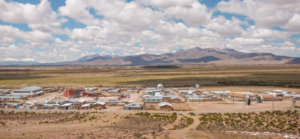 decisiones y actividades de difusión orientadas a facilitar la replicabilidad de esta experiencia en otros establecimientos y territorios altoandinos.
Following the award of CLP 310 million in FRPD funding for a 21-month implementation period, teams from the Regional Government of Arica and Parinacota and the University of Chile will begin the administrative and technical preparations required to launch the project in the coming weeks. These will include designing the planned interventions, acquiring scientific equipment, and coordinating with the regional and local institutions involved.
With this project, which together with the University of Chile’s contribution brings the total investment to CLP 325.6 million, the Arica and Parinacota Region is taking a step toward consolidating a territorial innovation model in which public infrastructure not only addresses the current needs of local communities, but also generates strategic knowledge to guide future regional investments based on scientific evidence.